McHistórias
Redefining employer branding through real employee stories.
Overview
McDonald's Brazil needed to change its employer brand without sounding corporate
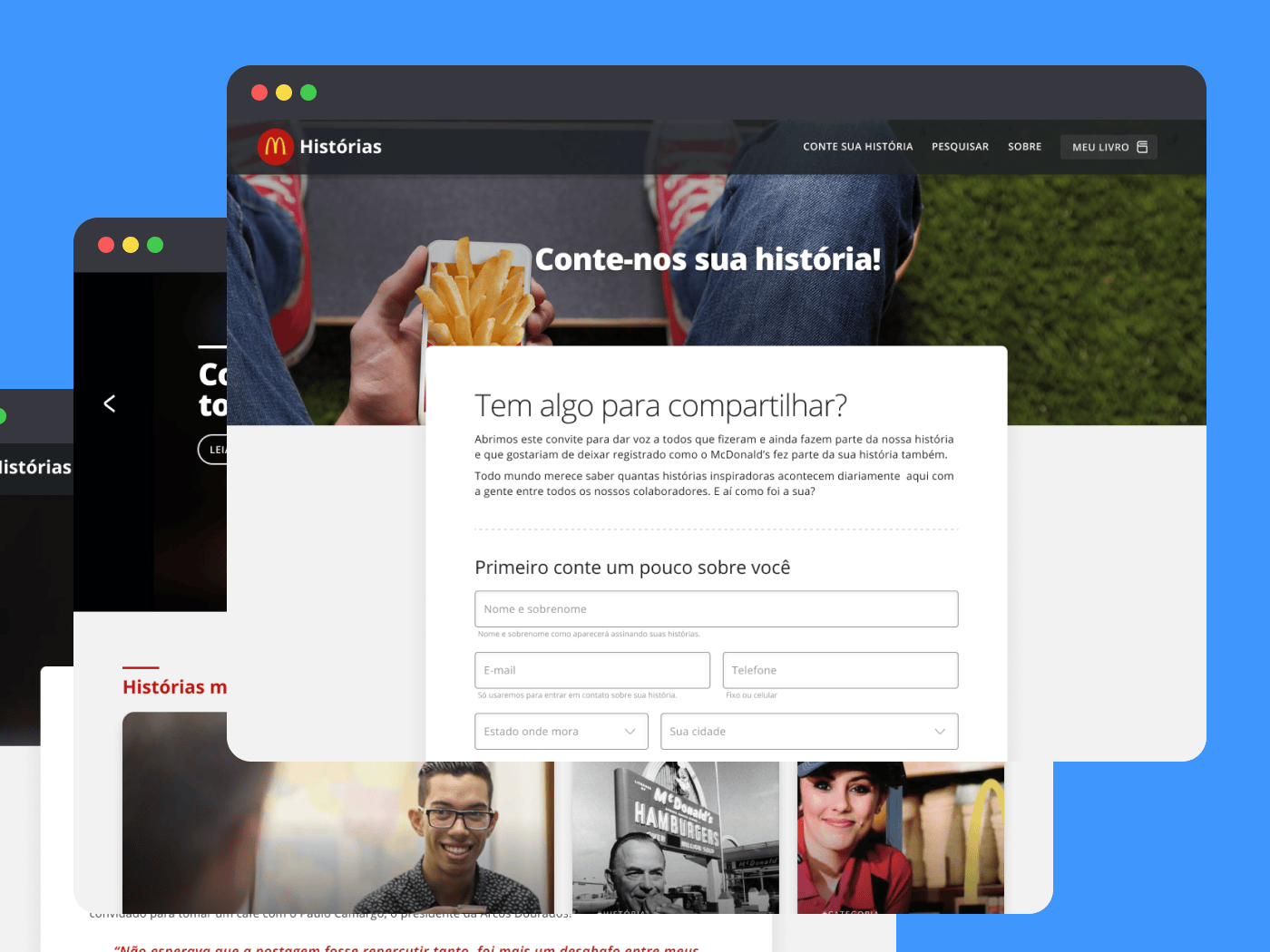
The brief was to break a persistent stigma: that working at McDonald's was a last-resort job. Repositioning the company as a legitimate starting point for careers didn't require changing the reality of the work. It required letting real people tell their own stories.
The project resulted in McHistórias, a custom-built content platform designed to collect, curate, and publish authentic employee stories at scale. The challenge was building a system that enabled honest storytelling while maintaining editorial quality and brand safety.
The problem
Corporate messaging lacked the credibility to shift perception
McDonald's Brazil needed to shift how people thought about working there, but traditional employer branding relied on top-down communication that audiences had learned to distrust. The company had the stories. They needed a system to surface them credibly.
The challenge was twofold: create a platform that enabled authentic storytelling, and do it in a way that scaled, with editorial oversight built in, not bolted on as an afterthought.
Who I designed for
An internal team responsible for brand perception at scale
Ana — Employer Branding Manager
Corporate Communication / Employer Branding · São Paulo, Brazil
Responsible for improving employer brand perception and managing communication initiatives around recruitment and company culture. Needed a platform that could sustain authentic storytelling without requiring heavy manual curation every cycle. The system had to be usable by her team without constant technical support.
Process
Discovery & Strategy
- Stakeholder interviews to understand brand perception challenges, communication constraints, and what "authentic" actually meant inside the organisation.
- User research to identify what made employer stories credible: what candidates and the general public actually needed to hear, versus what the company wanted to say.
- Defined success criteria: not the volume of stories published, but the degree to which they could withstand scrutiny and build actual trust.
Design & System Definition
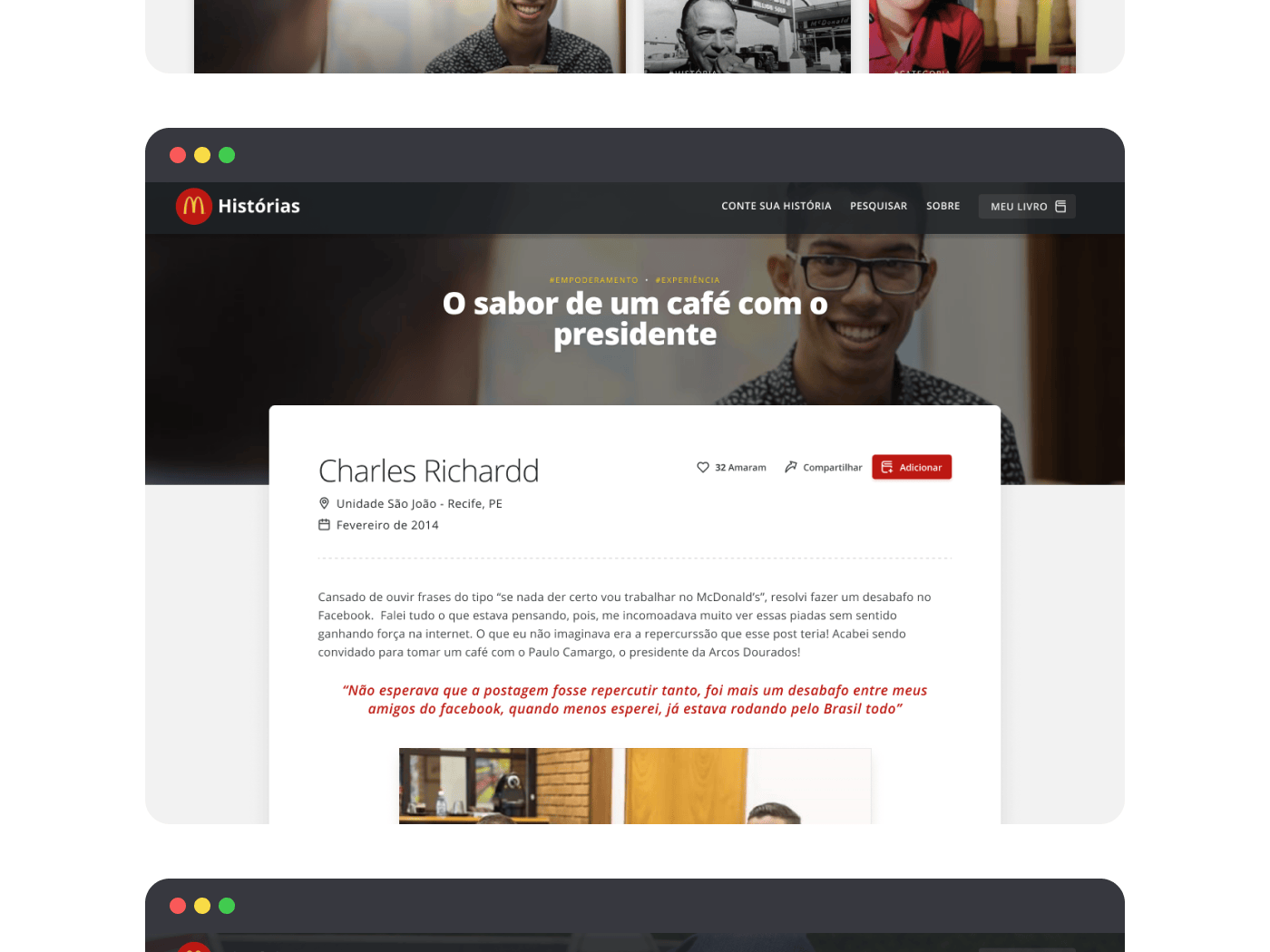
- UX and UI design of the public-facing platform, focused on readability, emotional engagement, and building trust through visual hierarchy rather than promotional language.
- Designed the admin and editorial CMS: submission, review, editing, approval, and publishing workflows. The goal was to make the editorial process fast enough to actually be used, not avoided.
- Aligned design, development, and communications teams to keep feasibility and scalability as constraints throughout, not discoveries at handoff.
Validation & Delivery
- Usability testing with internal stakeholders and target users to validate clarity of navigation, editorial controls, and overall tone.
- Iterated on key flows, particularly story submission and editorial approval, to reduce the friction that would otherwise cause the platform to go unused after launch.
- Delivered a reusable content platform with handoff documentation, enabling the team to operate it independently and grow the content library over time.
Outcomes
Created a platform capable of collecting and publishing employee stories at scale, with editorial controls built into the workflow, not added on top.
Enabled McDonald's Brazil to communicate employer value through authentic human narratives instead of top-down corporate messaging.
The platform reduced reliance on traditional one-off employer branding campaigns by creating a sustained, always-on content operation.
Key learnings
Authenticity in employer branding depends more on system design than on messaging. The content can be real, but if the platform makes publishing laborious or inconsistent, the real stories never make it out.
Balancing openness and editorial control is the core design problem in any user-generated content platform. Too much friction kills contribution. Too little creates quality and brand safety risks that the team won't tolerate long-term.
Content platforms are more effective when treated as long-term products, not one-off campaigns. The brief asked for a platform; the real ask was for a sustainable editorial operation. Design for both.