Twenty recipes, one constraint: make the machine the point
Designing a recipe book for Cosori's dual-zone air fryer that proved what the product could actually do.
Context
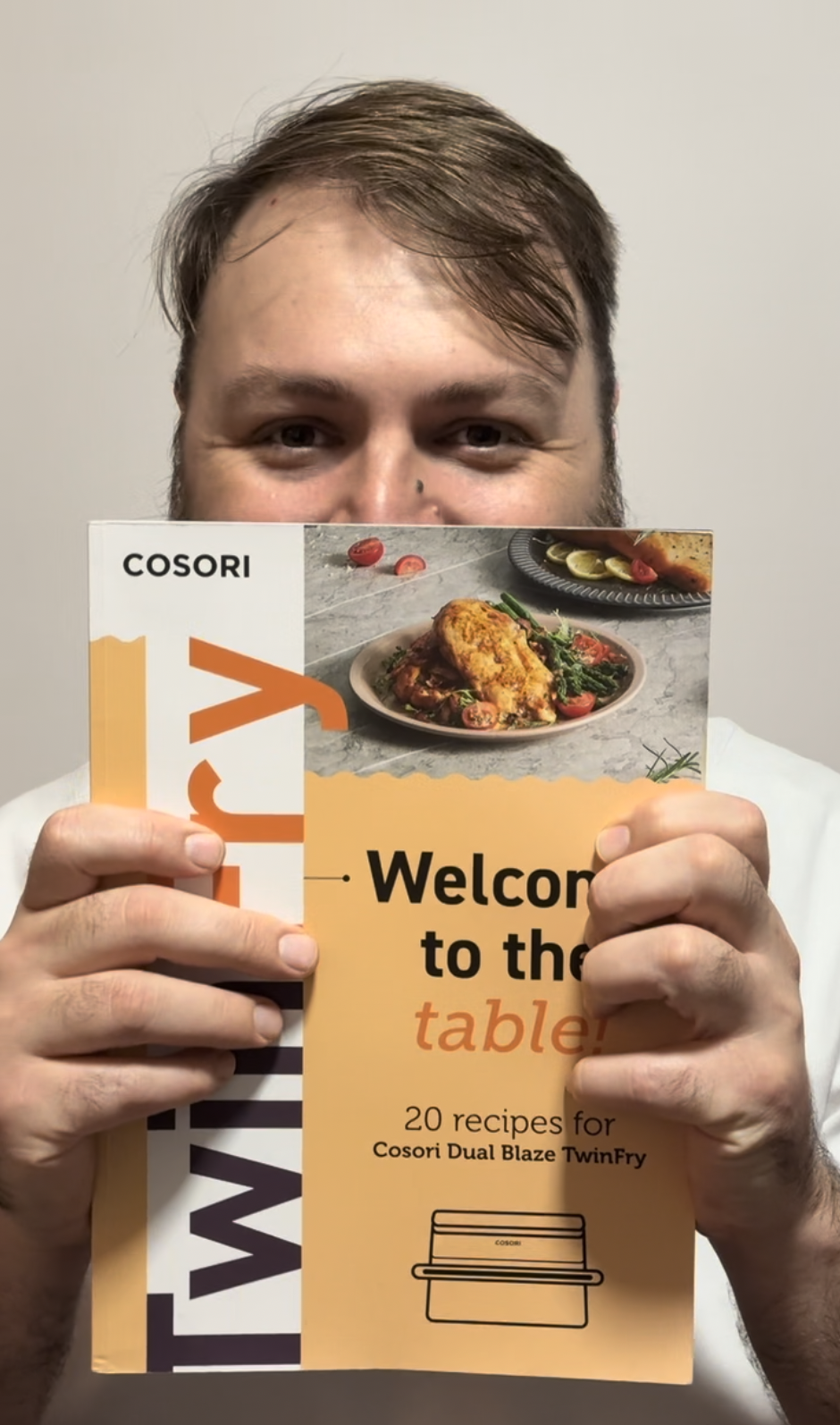
Cosori invited me to test the TwinFry and build a recipe book around it
Not as a food blogger. As someone used to thinking about how products communicate their value through use. The TwinFry is a dual-zone air fryer: two independent baskets, synchronized finishing, high capacity. On paper, it can do things a standard air fryer can't. The brief was to show that, in practice, through 20 original recipes.
Over two months, I developed and validated those recipes through multiple rounds of testing, treating each iteration the way you'd treat a design prototype: something to learn from, not just something to get right.
The problem
Most appliance recipe books treat the machine as a faster oven
Generic recipes adapted for an air fryer miss the point. They don't account for airflow behavior, heat distribution differences, or what changes when you're cooking two things at once in separate zones. The result is a disconnect between what the product promises and what users actually attempt with it after purchase.
The challenge: design recipes that only make sense on this specific machine. If you can make the same dish in a regular oven with less effort, the recipe has failed.
Approach
The appliance's constraints were the design brief
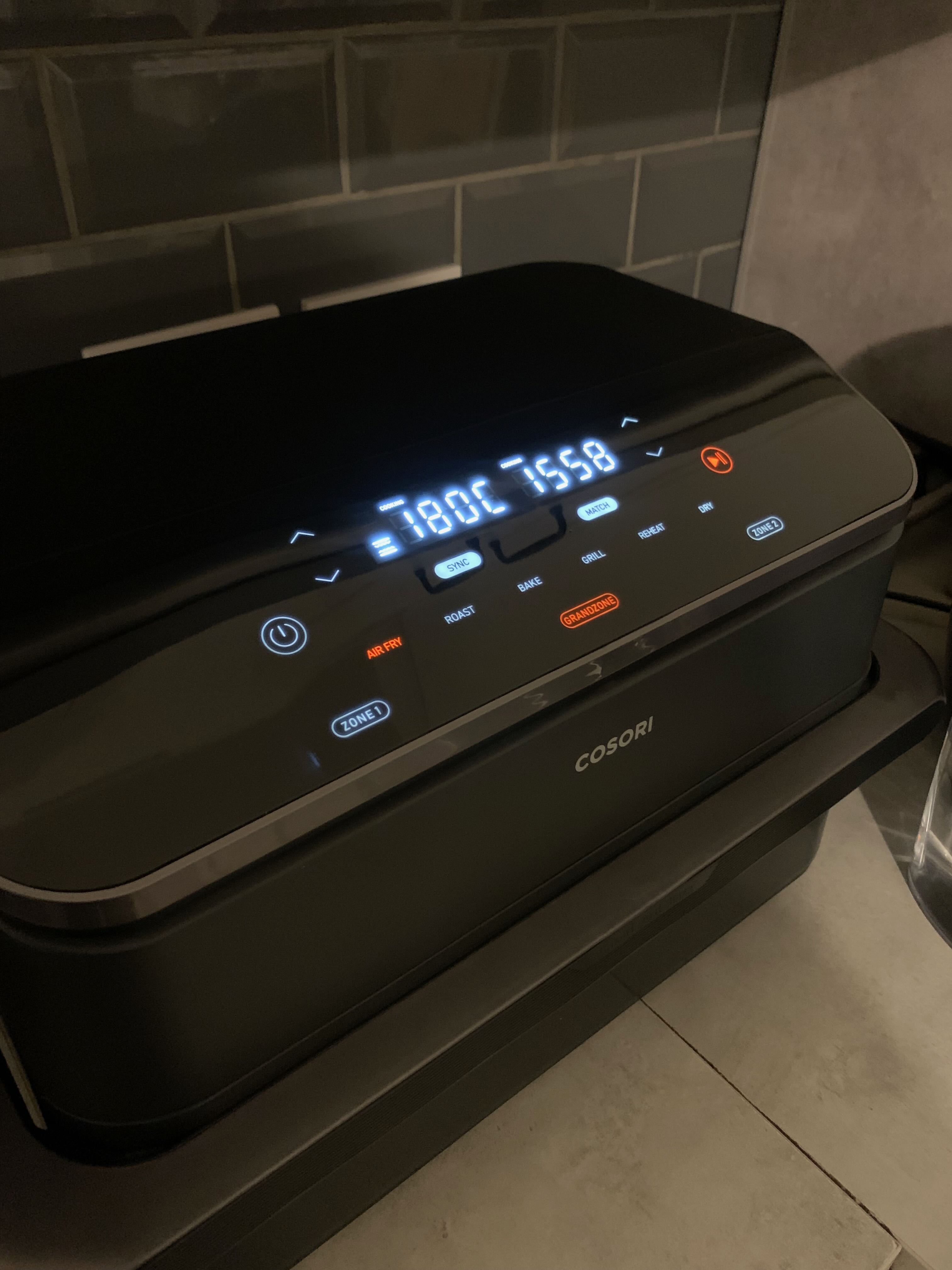
Before writing a single recipe, I ran a systematic exploration of the TwinFry's behavior across different ingredients, cooking times, and preparation styles. How does moisture affect crispiness at different temperatures? Where does the airflow create hot spots? How much does the synchronized finishing mode actually reduce the cognitive load of cooking a full meal?
Those answers shaped the recipe selection. Each dish was chosen to demonstrate a specific capability: dual-basket coordination, batch cooking efficiency, temperature precision, or synchronization between components that would otherwise require two cooking surfaces and constant attention.
Accessibility was the other constraint. A recipe that required professional technique to execute would fail in the hands of the target user: someone cooking at home who wants reliable results, not a culinary exercise.
Process
Research & product exploration
- Tested the TwinFry extensively across different ingredients, cooking times, and preparation styles to understand airflow behavior, heat distribution, and synchronization performance.
- Mapped common home-cooking pain points: inconsistent cooking, overcrowding, excessive preparation time, and difficulty coordinating multiple dishes at once.
- Analysed how recipe structure, ingredient density, and moisture levels affected performance inside the appliance, establishing reliable cooking patterns before designing around them.
Recipe development & iteration
- Created 20 original recipes specifically designed to leverage the TwinFry's dual-zone system and large-capacity workflow, each one demonstrating a capability the appliance has that a standard oven or air fryer doesn't.
- Balanced technical consistency with accessibility, ensuring recipes could be reproduced reliably by users across different cooking skill levels.
- Iterated through multiple testing rounds to optimise texture, cooking time, ingredient proportions, and synchronized finishing between components.
Content structuring & delivery
- Structured recipes with clear instructions, timing logic, and preparation sequencing to reduce cognitive load during cooking, the same problem a UX designer solves for a complex flow.
- Designed recipe flows that highlighted practical appliance benefits rather than treating the TwinFry as a generic kitchen tool.
- Delivered a complete, tested recipe collection aligned with both product marketing goals and real user cooking behavior.
Outcomes
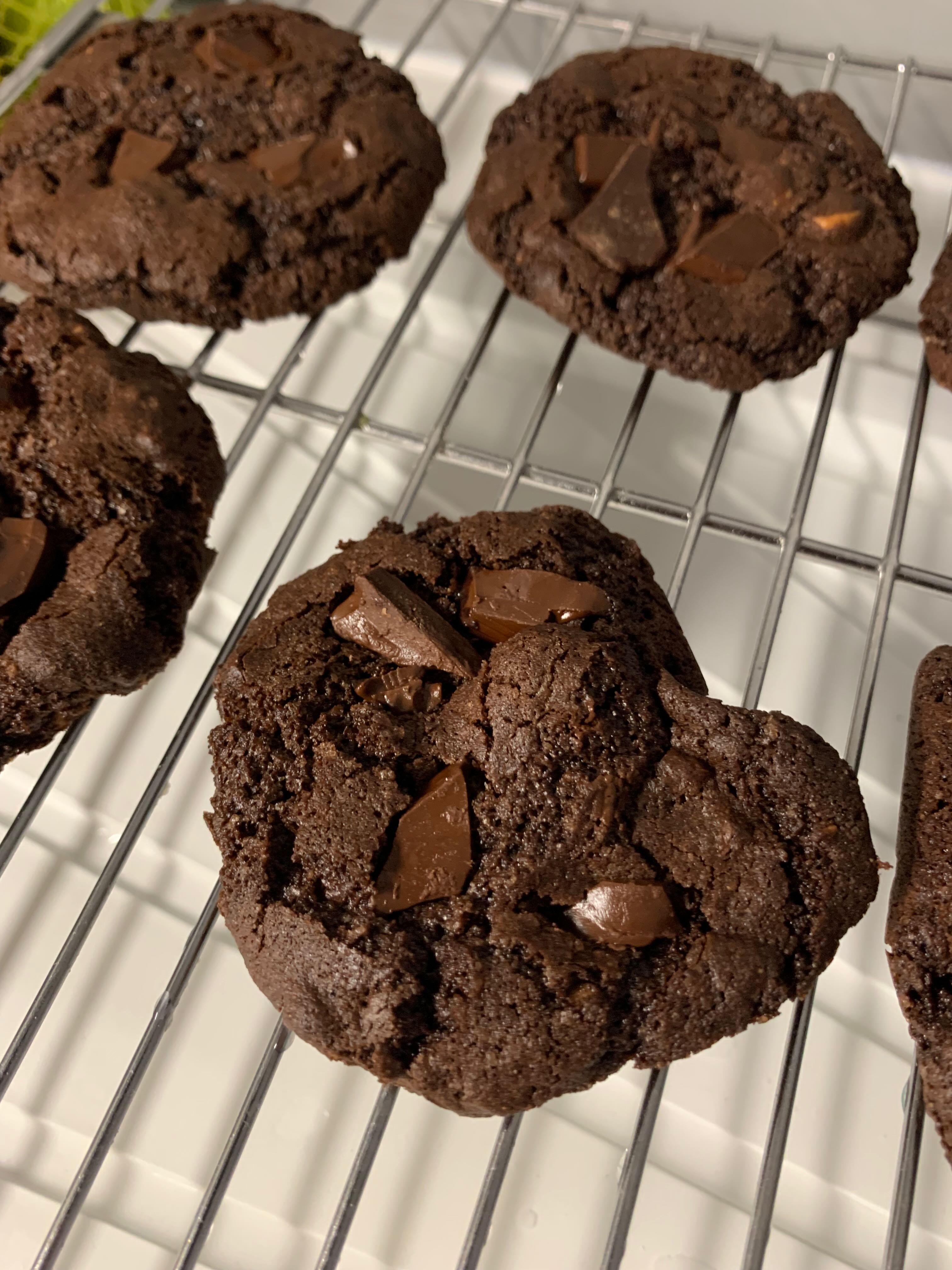
Fully tested original recipes, each optimised specifically for the TwinFry cooking system.
Demonstrated practical use cases for the appliance beyond basic air frying, reinforcing what makes the TwinFry meaningfully different from its category.
Recipe content focused on real-world usability and consistent results, not presentation optimised for photography at the expense of the home cook.
Key learnings
Good recipe development for consumer products is a systems design problem. Timing, heat behavior, workflow, and user cognition all interact. Getting one wrong undermines the others, the same way a broken information architecture undermines an otherwise clean interface.
Recipes designed specifically for an appliance perform significantly better than adapted generic ones because they account for the product's actual operational characteristics. The same principle applies to any feature designed around a real constraint rather than a hypothetical user need.
In culinary product experiences, reducing uncertainty and increasing predictability is more valuable to users than maximising complexity. People want to know the dish will work. That's the same thing people want from good software.