Teaching teams to listen by making music together
A large-scale workshop that made collaboration tangible, not explained but physically experienced.
Context
Corporate teams know the vocabulary of collaboration. They rarely feel it.
Alignment. Communication. Listening. These words live in every retrospective, every offsite, every leadership training. They're understood intellectually and forgotten by the following Monday. The gap is experience, not vocabulary.
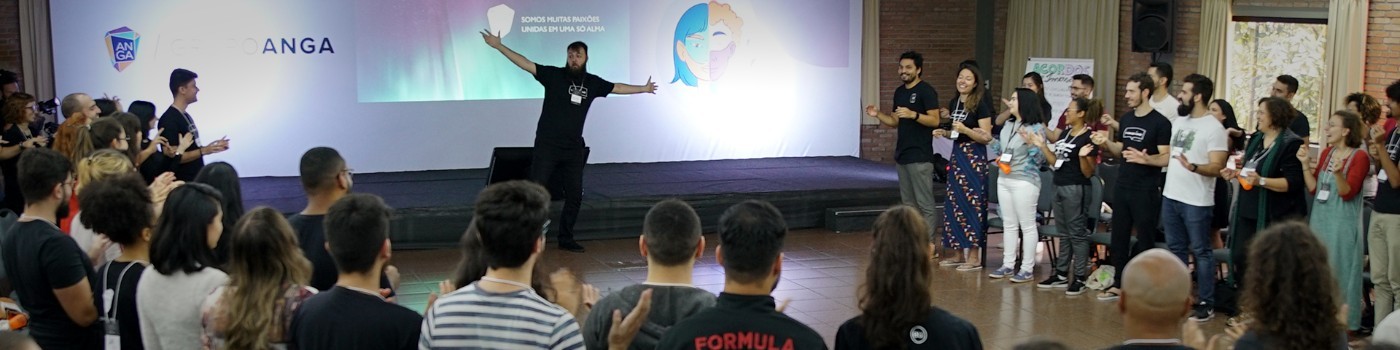
This workshop was designed to close that gap for groups of 100 or more people at a time, using body percussion as a live medium. No instruments, no musical background required. Just the body, a shared pulse, and the question of what happens when everyone has to listen in order for anything to work.
The problem
Most team-building activities are either too abstract or too recreational to leave a mark
Abstract activities produce insights that stay abstract. Purely recreational ones are forgotten the moment the team returns to their desks. Neither creates the kind of shared reference that teams can return to when they're actually under pressure.
The design challenge: create an experience that scaled to large groups, required no prior expertise, and made collective dynamics viscerally real: something participants would remember not as an exercise they completed, but as something they lived through together.
Approach
Use music as a working model of how organisations actually function
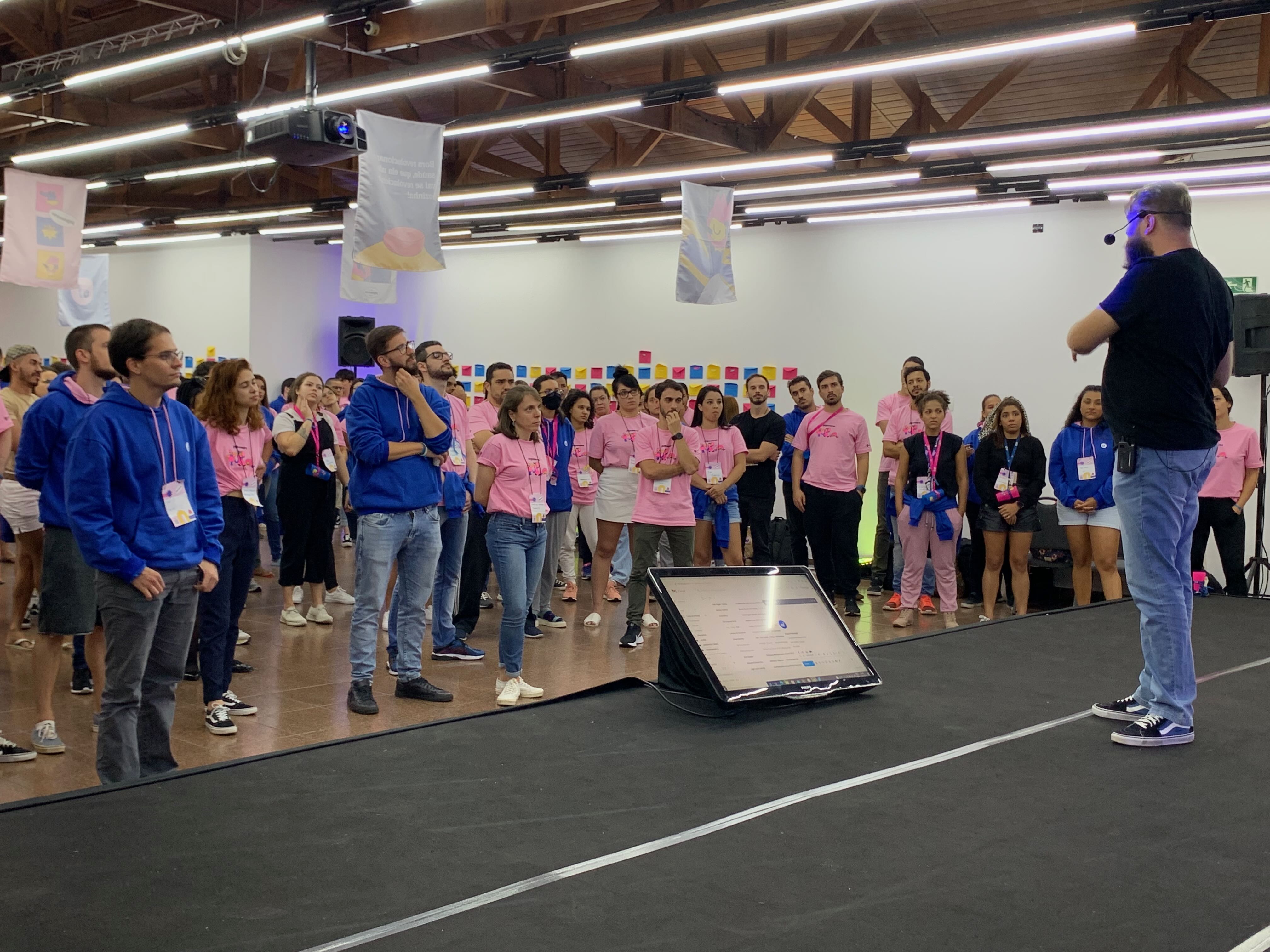
The workshop used body percussion (feet, hands, chest) as its medium precisely because it requires no expertise and scales to any room size. But the structure was deliberate: three phases that mirrored the real progression from individual presence to collective coordination.
Before the first beat, I framed the session around three elements that matter in both musical performance and organisational life: intimacy (trust and psychological safety), presence (full attention to the moment), and fun (playfulness as a performance catalyst). That framing lowered resistance and gave participants a lens to interpret what they were about to experience.
The reflection at the end was as designed as the activity itself. Participants had just lived through something; the facilitated debrief gave them language for what they'd felt. That's where the lasting insight was generated.
Experience structure
Creating presence and safety
- Started with simple body percussion exercises, marking time with feet, then gradually adding claps, chest taps, and thigh hits, to build physical awareness and lower resistance before anything more demanding was asked.
- Introduced the session's conceptual frame: intimacy, presence, and fun as the three conditions for collective performance. This established psychological safety before participants were asked to take any risk.
- Kept the facilitation energy high and the pressure low. The goal: make the first five minutes feel like something anyone could do, not a performance test.
Autonomy and differentiation
- Divided participants into smaller groups, each asked to create their own rhythm within a shared constraint: 4/4 time. Same rules, different expressions.
- Groups rehearsed independently, then performed for each other, building creative ownership and group identity before the larger integration.
- Some groups voluntarily exchanged rhythms, teaching and learning from each other without being asked to. That emergent behavior became one of the richest moments in the debrief.
Systemic integration and reflection
- All groups performed simultaneously. Despite having different rhythms, everything aligned, because everyone stayed anchored to the same tempo. The room felt it before anyone could explain it.
- The closing reflection drew direct parallels between what participants had just done and how their organisation actually works: each group as a department, tempo as shared goals, listening as cross-team awareness, adjustment as continuous collaboration.
- Provocative questions surfaced insights from participants rather than delivering them, making the reflection the richest part of the experience.
Outcomes
Participants per session across two editions, all engaging with the experience without prior musical knowledge.
Participants consistently articulated meaningful insights about communication, alignment, listening, and shared responsibility, without being told what to conclude.
Teams left with a concrete, embodied memory of what collective coordination feels like, something to point back to, not just a slide from a training deck.
Key learnings
Experiential learning works when the experience is genuinely hard to explain in words. The moment participants had to listen to each other to stay in rhythm, they understood something about collaboration that no presentation could have communicated.
Designing for large groups means designing for emergent behavior. You can't control what 100 people do. You can only create conditions where something worth paying attention to is likely to happen. The groups that spontaneously taught each other their rhythms proved that.
Constraints are generative. The shared rule of 4/4 time produced more creativity and more cohesion than an open brief would have. The same is true of well-defined design problems. Clarity about the constraint is what enables real inventiveness.